
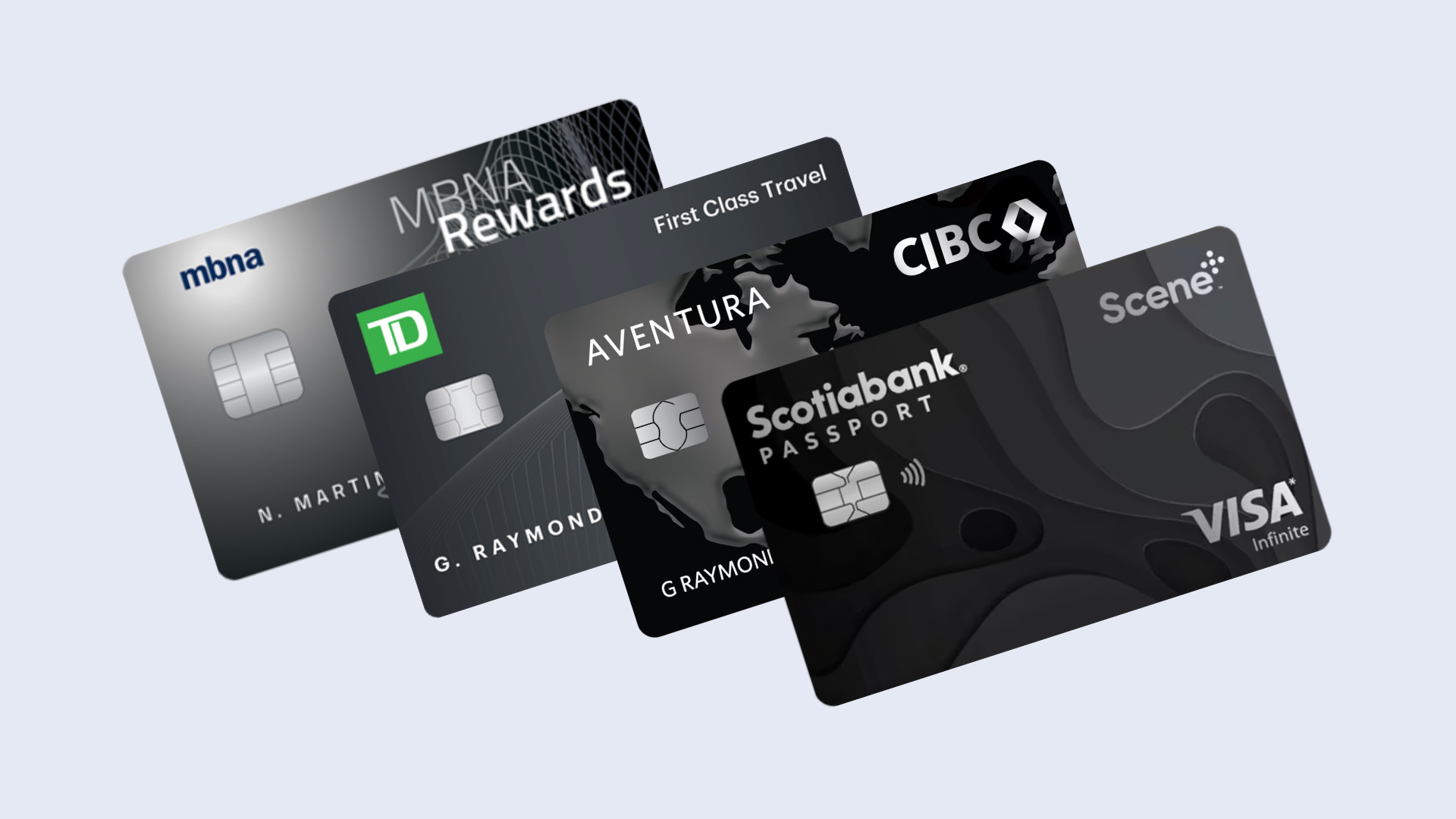
Introduction:
Have you ever felt overwhelmed by all the various loyalty programs out there, wondering if it’s even possible to extract value from your points?
The truth is, applying for new credit cards, changing your spending patterns, and figuring out how to redeem different points through various programs is not for everyone, and there is a chance that the promise of potential rewards may not be worth the effort.
But what if there was a simpler, more predictable path to earning rewards?
This is where fixed-value points comes in!
Instead of juggling multiple programs and deciphering complex redemption charts, fixed-value points offer a straightforward and predictable path to rewards. You earn and redeem value just from everyday spending, gaining reliable rewards without the extra hassle. Furthermore, the versatility of fixed-value points extends beyond travel, offering flexible redemption options like cashback, free groceries, or even gift cards, catering to a wide range of individual needs and preferences.
In this post, we will cover the basics of fixed-value rewards and show how we can maximize their potential and transform daily spending into meaningful value.
TLDR:
- Most financial institutions offer fixed-value rewards programs. Selecting the right one depends on your spending habits and the specific bonus categories offered by each card or institution.
- The value of fixed-value rewards can be determined by calculating the rate of return (ROR). Simply divide the value of earned rewards by the amount spent to obtain those rewards. You can also use online calculators on credit card websites to do this.
- Fixed-value rewards can be used for more than just travel, some programs offer cashback, groceries, discounts, or gift cards. Make sure to calculate the rate of return before making a redemption.
- If groceries and dining out are a large part of your monthly expenses, the MBNA Rewards World Elite Mastercard offers a high average rate of return (AROR) of 3.63% or more!
Fixed-Value Rewards in Canada:
Canada boasts a robust landscape of fixed-value rewards programs, including ones offered by each of the Big Five banks. In addition, other financial institutions such as American Express, MBNA, National Bank, PC Financial, and Canadian Tire Bank also have their own fixed-value rewards programs.
Typically, each fixed-value point is worth between 0.5 to 1 cent per point (CPP). However, exceptions exist within Amex, CIBC, and RBC, where their fixed-value points are potentially worth more under specific redemption scenarios.
Using Fixed-Value Rewards:
Fixed-value rewards offer versatile redemption options, primarily for travel, cashback, or everyday goods like gas, groceries, and gift cards.
- Travel: Most programs feature in-house travel portals, generally yielding 1 CPP. However, Amex Fixed Points Travel (airlines and hotels) can yield up to 2.2 CPP, CIBC Airline Rewards can yield up to 2.29 CPP, and RBC Air Travel Redemption can yield up to 2.33 CPP. However, keep in mind that these higher values often require specific redemption conditions (e.g. short haul domestic flight, with a capped ticket price), making them more difficult to achieve.
- Cashback: This is a popular option, allowing for statement credits towards purchases. Some cards offer direct cashback, while others allow redemption of points for travel-related expenses.
- MBNA offers 1 CPP for travel booked via its travel portal, or 0.83 CPP for credit towards ANY purchase (120 points = $1).
- Scene+ points are worth 1 CPP both through the Scene+ travel portal, or via the “apply points to travel” option for any travel related expenses.
- TD Rewards offers 0.5 CPP via ExpediaForTD or 0.4 CPP for “Book Any Way” travel.
Note: TD earns a base of 2 points per $1 spent, making it comparable to other programs.
| MBNA Rewards: | Scene+ Points: | TD Rewards: | |
| Travel Redemption: | 1 CPP | 1 CPP | 0.5 CPP |
| Cash Redemption: | 0.83 CPP | 0.7 CPP | 0.4 CPP |
- Gas, Groceries, Gift Cards, and Merchandise: While most programs offer gift cards or merchandise redemptions, the rates are usually terrible and should be avoided. However, there are at least two notable exceptions.
- PC Financial offers redemptions towards gas, groceries and merchandise at 1000 points per dollar (0.1 CPP), but, the PC Insiders World Elite Mastercard offers earn rates of 70 points per liter at Esso and Mobil (7 cents/L), 40 points per dollar at Loblaws (4% value), and 50 points per dollar at Shoppers Drug Mart (5% value), translating to significant cashback equivalents.
- RBC Avion points offers redemption rates of 1 CPP for gift cards towards Air Canada, Porter, and WestJet.
The benefit of fixed value points is in its simplicity, so the goal should be to maintain simplicity while seeking opportunities to optimize value.
Maximizing Fixed-Value Points:
In order to optimize fixed-value points, understanding the concept of rate of return (ROR) is crucial. In simple terms, the rate of return is the value of points earned relative to the amount of dollars spent earning them, and can be calculated using the following formula.

Most fixed-value programs offer a base ROR of around 1%, meaning that for every $1 spent on a card, the user gets about $0.01 back in value. However, with certain cards, there are category multipliers which can boost the ROR significantly.
To demonstrate, lets consider a two-person household with the following monthly expenses:
- $500 on Dining Out (incl. takeout)
- $1000 on Groceries
- $200 on Gas
- $200 on Car Insurance
- $50 on Subscriptions
- $250 on Recurring Bills (e.g. phone, internet, gym)
- $100 on Travel
- $100 on Household Utilities
- $500 on Other Expenses
Total monthly spend: $2,900 (excluding rent, car payments, and debt).
Using online calculators provided by credit card issuers, we can estimate the average rate of return (AROR):
Note: To find the AROR, we must subtract the annual fee and the sign-up bonus.
MBNA Rewards:

Spending this amount would yield 168,450 points, minus the 30,000 points sign-up bonus and the $120 annual fee (12,000 points), for a return of 126,450 points, or $1264.50 in travel, which is a 3.63% AROR.
TD Rewards:

Spending this amount would yield 298,200 points, plus an annual bonus of 10% earned (capped at 10,000 points), for a total of 308,200 points, minus the sign-up bonus of 135,000 points, and the net annual fee of $39* (7,800 points), for a return of 165,400 points, or $827 in travel, which is a 2.38% AROR.
*The $139 annual fee for this card is partially offset by the $100 annual travel credit.
Scene+ Rewards:

The AROR for Scene+ Rewards will vary depending on which Scotiabank card you have, and whether you shop at Sobeys grocery stores.
With the Scotiabank American Express Gold card, you could earn 129,600 points annually with the same $2,900 monthly spend, minus the $120 annual fee (12,000 points) for a return of 117,600 points, or $1176 in travel, which is a 3.38% AROR.
With the Scotiabank Passport Visa Infinite card, you could earn 58,800 points annually, with the same $2,900 monthly spend, minus the $150 annual fee (15,000 points) for a return of 43,800 points or $438 in travel, which is a 1.26% AROR.
In order to maximize fixed-value points, choosing the right card is crucial. When done correctly, the same everyday spending can substantially enhance the value of travel rewards without requiring additional effort or altering spending patterns.
Conclusion:
While fixed-value points are less flashy than variable-value points, their simplicity makes them a powerful tool for acquiring value from everyday spending. In Canada, some fixed-value cards offer up to a 2% ROR on certain purchases, but most cards rarely go beyond 1.5% AROR. By understanding spending patterns and selecting the right fixed-value card, it’s possible to achieve a much higher return and earn over $1,000 in “free travel” annually.
To learn more about choosing the right card, check out this post here.
Leave a Reply